
Thinning scissors: choosing the right cutting ratio
4 August 2026 — Togiya Europe
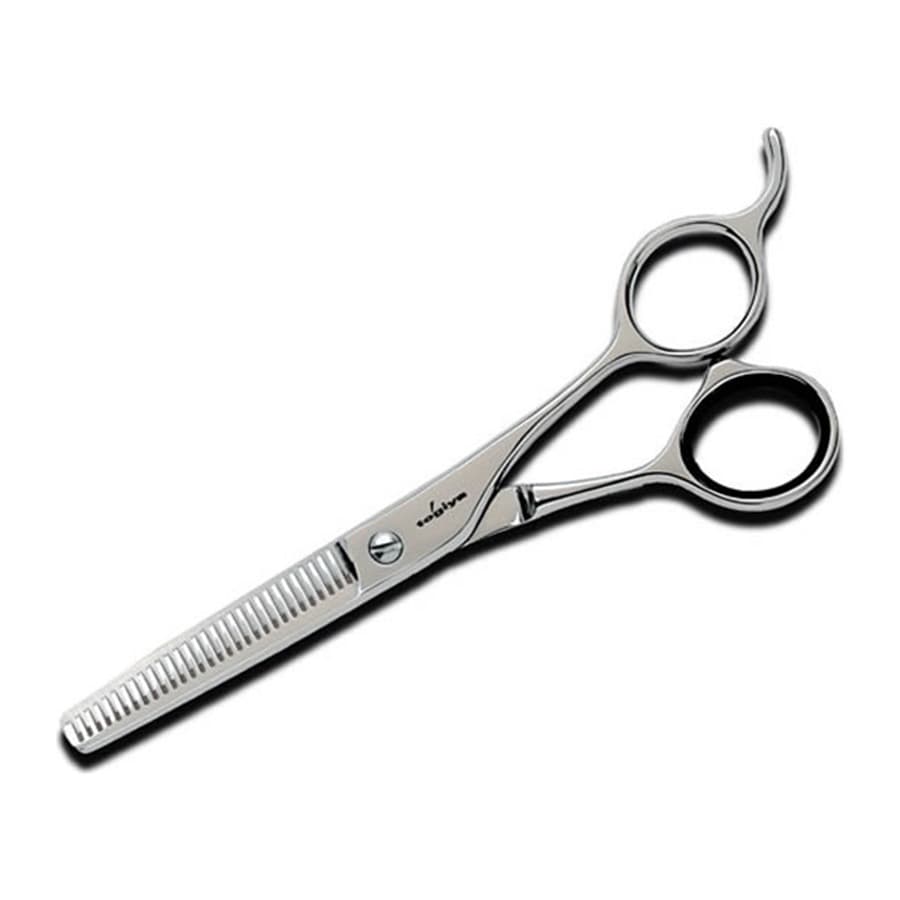
The thinning scissor is the most poorly bought tool at the hairdressing station: it is often chosen at random, when a single figure determines everything — the cutting ratio, i.e. the percentage of hair cut at each closure.
How it works
One blade of a thinner is smooth, the other carries teeth. At each closure, only the hairs that meet a tooth are cut; the others slide into the notches. The ratio therefore depends on the number of teeth, their width and the shape of their notch.
The three families
- 10 – 20% (finishing): many fine teeth. Softens lines, blends demarcations, texturises without thinning out. Invisible to the eye: ideal at the end of a cut and on fine hair.
- 25 – 35% (all-round): the de-bulking standard. Removes volume in a controlled way on most hair types. If you own only one thinner, it is this one.
- 40% and above (structure): wide, spaced teeth. Boldly strips thick masses, creates stippling and texture effects. For confident hands only: every closure shows.
The mistakes that cost a haircut
- Working wet hair with a thinner: the dry result will be twice as thinned as intended.
- Closing several times in the same spot with a high ratio: holes cannot be recovered.
- Using a dull thinner: the teeth fold the hair instead of slicing it — hence split ends and irregular regrowth. The annual sharpening applies to thinners too.
At Togiya
Every series in the catalogue offers its thinners, forged in the same steel as the cutting blades, with tooth patterns designed in Inuyama. On each product page, the Thinning type and the number of teeth guide you. See the catalogue's thinners — and if hesitating between two ratios, take the lower one: you can always go over again, never glue back.